Audi A7 Tailpipe

The Volkswagen Emissions Scandal

Back in 2015, Audi got itself caught up in what was to become a massive, industry wide scandal about the emissions that come out of the back of many diesel cars across the globe. Also known as ‘dieselgate’, the Volkswagen Emissions Scandal was thanks to the US government discovering a special piece of software installed on Volkswagen’s ECUs which adjusted the car’s setup when it detected that it was undergoing testing.

For years, we were advertised that diesel was the future for ‘green’ motoring, and this was reflected in the fact that diesels were more economical and most notably, much cheaper to tax. During the 2000s, diesels became the far more popular choice for buyers, with over half of sales of Volkswagen’s popular family car, the Golf, being diesels.

Unfortunately, this scandal affected far more people than just Volkswagen. Audi, Seat and Skoda were amongst the other most notable companies to be affected due to the fact that they use a whole variety of different TDI engines from the VAG parts bin. It was revealed that this scandal could affect well over 10,000,000 cars worldwide and that cars were producing up to 40x more nitrogen oxide than what US laws allow.

In the UK at least, many cars were issued a recall notice that would install new software to the car’s engine management system. However, people have since been reporting reduced MPG figures, reduced performance and reliability problems (most notably with turbochargers and EGR valves) since the update. If the scandal itself didn’t dent the reputation of the VW Group, then the response to the situation most certainly has.

So, how has the scandal affected the car industry in the last 3 years? Well, we can see that sales figures for diesel cars has dropped significantly with lower petrol prices and the rise of modern turbocharged petrol engines which offer lots of power and near diesel levels of fuel economy. It has also seen new regulations for diesels, which makes it harder than ever to own one. Not only have we seen the rules about diesel emissions in the yearly MOT become much more strict, but we are also seeing the introductions of emission zones that restrict the use of diesels in certain areas (most notably, the new ULEZ zone in Central London).

The big question that we continue to ask ourselves is how the popularity of diesels will change over the next few years, with a real rise in hybrid and electric technology, not to mention the return of petrol for many buyers, will we begin to see the demise of diesels, only a matter of 10 years after the government recommended we buy them?

Audi Quattro S1

How Audi changed the face of rallying forever

Here we have another success story for Audi in the world of motorsport, although this story was much earlier than their domination at Le Mans. Rallying was a popular form of motorsport and had seen many great times throughout its history. In 1982, a new set of regulations called ‘Group B’ were introduced to help simplify the previous regulations.

At this time, cars that competed in rallying were typically uprated versions of everyday road-going models. However, Audi came along with a product that simply revolutionised the sport. They had been working on a new sports car for several years before Group B came into force, but decided to take the plunge thanks to one significant advantage. Whereas most rally cars at the time were front-wheel drive or rear-wheel drive. Audi’s new model, the Quattro, was four-wheel drive.

The Quattro was technically an old regulation Group 4 car, uprated to Group B specification. It entered a fierce battle with Lancia which had launched a rear-wheel drive Group B car, the O37. 1983 saw Lancia take the manufacturer’s championship with one race to spare. But, this would be the last time a two-wheel drive car would ever win the world rally championship again.

1984 saw Audi take the championship win, but the win was bitter-sweet as its sheer pace had came to light to other manufacturers. Peugeot responded by joining mid-way through the season, where they launched the 205 T16. The 205 was lighter and had a shorter wheelbase, making it more agile. It was the start of a war between the manufacturers, where the cars became insanely fast and dangerous, not to mention the spiralling development costs.

1986 became an interesting year for the sport with the cars reaching their peak in performance, and Ford joining with their RS200. However, on just its second outing, it plowed into a group of spectators. A further fatal accident involving a Lancia later in the year saw the Group B cars banned. Audi and Peugeot immediately withdrew from the series whilst the other manufacturers adapted their cars for the new regulations.

Group B will always go down in the eyes of rally fans as the ‘golden era’ of the sport. There was great sadness with there being so many fatal accidents, but without the era, the sport would never have grown to the size it is today. Peugeot returned to the sport in the late 90s/00s with the 206 and 307CC. But, Audi has never returned to the sport. But, it can be safely said that the Quattro revolutionised the technology used for years to come.

Audi TT

20 Years of the TT – from Concept to Icon

The Audi TT is a firm favourite in the UK and has been topping the sales charts in its sector year-on-year. Today, we take a look at the history behind Audi’s iconic sports car.

The first concepts of the TT were shown to the world’s media at the 1995 Frankfurt Motor Show, but didn’t actually hit the showrooms until 1998. Unfortunately, the early days of the model saw a series of very serious, fatal accidents when the car was driven at high speed. Most notably during sudden lane changes or sharp turns. All of the early cars were recalled in late 1999/early 2000 so that suspension modifications could be made, as well as the introduction of an electronic stability program (ESP) and rear spoiler.

The first generation TT was based upon Volkswagen’s PQ34 platform, the same platform we saw in the 4th Generation Volkswagen Golf and brand new Audi A3 8L. It was offered with two petrol engines, a 1.8 litre turbocharged engine, found in the Golf GTI, as well as a 3.2l V6. It was also offered with front wheel drive as well as Audi’s Quattro four wheel drive system. Volkswagen’s ‘DSG’ gearbox was then launched with the model in 2003, which promised much faster gear changes than what had been seen with automatics at the time, thanks to having two clutches.

The TT soon became more of a fashion statement than the driver’s car that people had hoped for. The stereotypical driver for a TT was a blow-dried salesman, trying to make a statement in the company car park. Although it was raced in the DTM, the German Touring Car Championship, it still was unable to shake off this image. However, in 2006, the second generation TT came along, with a hope to change this image. Again, based on the same platform on the Golf, this time, the 5th Generation, the recipe was very similar but like many VW Group products, this is all it needed.

The new TT was a little bit longer and wider than it’s predecessor. This made it more stable during high speed driving. This was also the first time the TT would see a specific ‘sports’ model, the TTRS. Although it was a much better car to drive, even in standard form, it still couldn’t hang onto the benchmark for driving pleasure that had been set by its German rivals at BMW and Porsche.

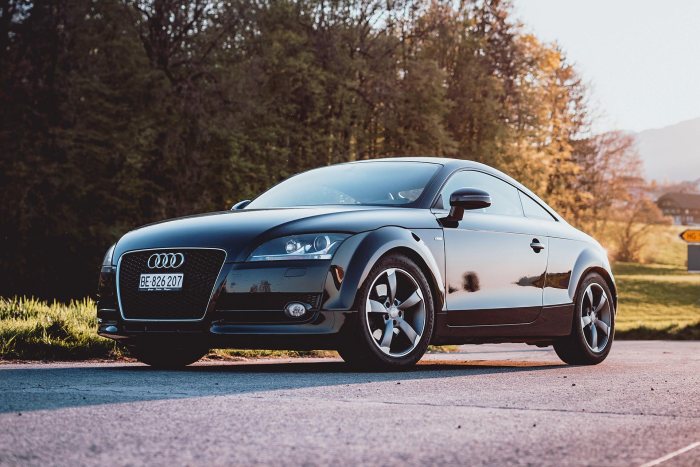
The second-generation TT was also the first time that a diesel engine would be featured in the model. At the time, many people questioned this decision by Audi, but it actually made a lot of sense and opened the car up to a whole new market. The 2l diesel engine produced around 170bhp and was paired up to Audi’s Quattro system, so provided plenty of performance for many but with the added benefits that a diesel engine would offer, in the form of cheaper tax and improved fuel economy.

This generation TT, also known as the TT 8J, won a huge number of awards over its 8 year lifespan. It won the 2006 Top Gear Coupe of the Year, 2006 Fifth Gear Car of the Year and World Car Design of the Year 2007. In 2019, it won yet another award from iSeeCars as the longest-lasting sports car, with an estimated lifespan of 150,000 miles. After some research on the popular car sales site, AutoTrader, I managed to track down a clean example with 201,000 miles. Quite an achievement, really!

In 2014, the TT entered its third-generation. Again, the same format. Based on the Volkswagen Golf, this time, the 7th Generation. The manufacturing process was simplified this time round, with less engines to choose from – but a more efficient manufacturing process. A large focus was towards the changing needs of customers, who in recent years, have pushed more towards new technology in cars. So, this car has really focused on driver ergonomics, and the technology that is available to the user, which includes a whole host of driving aids, and a new form of digital instrument called ‘Virtual Cockpit’.

Audi have announced that to celebrate 20 years of the TT, a special edition will be launched. Only 999 will be produced and incorporate a variety of details from the original 1995 concept. Only time will tell on exactly what this special edition will be like. But, if the car is anything like what we have seen in the past, then it will be a fantastic way to celebrate such an icon.

Audi R18

Audi at Le Mans

Audi has seen many successes in motorsport over the years, from rallying in the Group B era, to touring car racing in the 1990s. However, Audi made the decision to further develop their technologies by taking on one of the most challenging, oldest races of them all… The 24 Hours of Le Mans.

Audi joined the series way back in 1999, around the same time their icon TT was launched. It all began with a model known as the R8R which made its debut in the 1999 12 Hours of Sebring. It then went onto shake the world of Le Mans by finishing in the top-three positions on its very first outing. At this time, Audi were trialling two concepts to further develop, the R8R and R8C – the R8C project was scrapped after numerous breakdowns and lack of pace during the race.

Audi returned in 2000 for another attempt. This time, with a new development to the R8, now known as the R8 LMP. This was the car that changed the face of the sport forever, winning the race in 2000, 2001, 2002, 2004 and 2005. The R8 LMP didn’t get a clean sweep thanks to Bentley, another Volkswagen brand taking victory in 2003. The sweetest win from this era was the first, claiming a 1-2-3 finish. By 2005, the R8 LMP was beginning to show its age and a replacement was announced.

In 2006, a new chapter in Audi’s success story at Le Mans began with the all-new R10. What made this racer so different to anything that had been seen before was one fundamental difference. It ran on diesel. Now, running a diesel race car is not a first for Audi, but it was definitely not a common move. Again, for 2006, 2007 and 2008, Audi dominated Le Mans. So much so, that the organisers imposed restrictions on the car to make the racing more competitive. 2009 and 2010 saw the final years of the R10, with poor results compared to their successes over the previous 8 years.

For the 2009 and 2010 seasons, the R10 was ran by a private team, whilst Audi moved onto launch the R15. Again, it ran on diesel and it was hoped that the car would continue the success story for the company, whilst combatting some of the restrictions the previous cars had. However, a new challenger had come along with their own diesel racer – Peugeot with the 908 HDI FAP. After a string of failures at the 2010 Le Mans, Audi once again took a 1-2-3 finish, but this is the last time the R15 would ever take a victory before it’s retirement in 2011 thanks to a change in regulations.

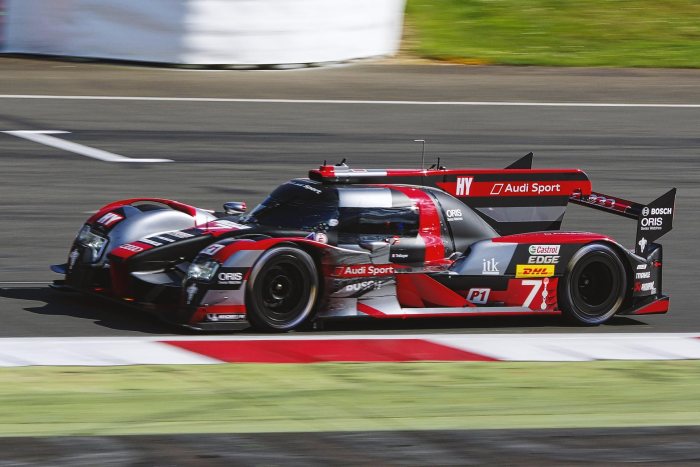
2011 saw the launch of the R18, a closed-top car that was designed to meet the new regulations. How did it do on it’s debut in Le Mans? You guessed it, the R18 won. Only one made it to the finish though after the other two cars were crashed earlier in the race. They continued to take wins at Le Mans up until 2014, but it was becoming clear that Audi was loosing their touch.

In 2016, it was announced that Audi would withdraw from the Le Mans programme and WEC (World Endurance Championship) to pursue a new and upcoming sport, Formula E. They left the sport with outstanding figures, though. 13 wins at Le Mans, making them the second most successful manufacturer after Porsche, which had 18 wins to their name.